
Q: What happens if you give a memelord your marketing budget?
A: Expensive jokes.
If working in marketing has taught me anything, it’s that everyone is an expert at marketing.
Even in 2025, when marketing is a complex balance of product and market knowledge, raw data handling, customer insight from cultural preferences to lifetime value and risk profile, comprehension of wider corporate strategy, delivering within an ever-changing techstack and people management of colourful profiles… everyone is somehow an expert.
“It just needs good marketing!” Is a painfully common and utterly impotent phrase that if you work in marketing you are probably sick of hearing, and if you work in any other department, you’ve probably said.
As a marketer, I am extremely interested in how the story of the WPT “Red Flag” promotion will play out.
A “Red Flag promotion” is a name I give to promotions which, when they are first raised in meetings, I predict will be more of a pain in my operator-arse than benefit to the bottom line.
There is no such thing as a “bad promotion” or “bad marketing”, there is only promotional marketing that is misaligned with either corporate/product/brand strategy, or out of whack with budget expectations. I don’t work for WPT, so I’m not going to pick at this, let’s give them the credit that they either know what they are doing strategically, or they have so much money they don’t need a strategy.
I am very concerned that what we are seeing is one of the cracks in the duct-taped hull of the poker submarine and I am most interested in the potential impact on WSOP if they do not react to this promotional hijacking of their branded event, and what their legal options may be.
Prove Collusion
Proving collusion in poker is usually like wrangling fleas… but not this time.
The WPT promotion was openly discussed and tweeted about. Everyone saw it coming and, very crucially, everyone includes WSOP.
It’s weird-ass collusion, and that’s where the defence lawyer pushes back. WSOP had the opportunity to prevent this collusion (the WPT promo was well advertised) and the collusion was predictable, nay, unavoidable (100000 tweets from nerds as evidence).
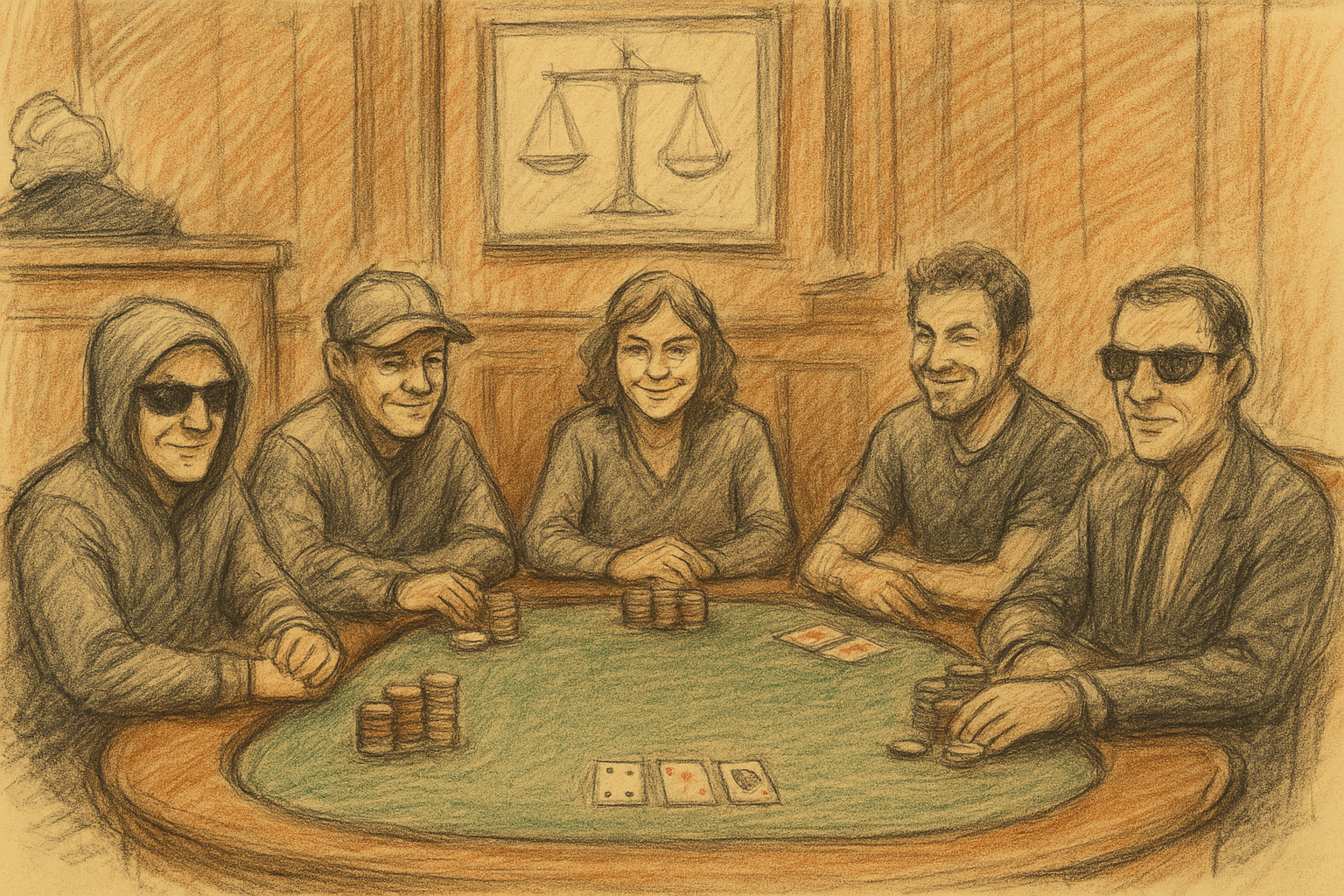
Another problem with pushing the collusion angle is it punishes the players and leaves WPT largely unpunished for their shenanigans.
At the moment, it’s definitely enough to withhold funds; WSOP should not be paying out to a potentially corrupted prize fund distribution and none of us should be asking them to. They also have to prepare to protect themselves from a claim of collusion from one of the other player(s) in the fields.
We might all think we know the ins and outs of Nevada gaming legislation, but realistically we do not. Lawyers are slow, gaming lawyers are extra slow, and it’s licence-demanded to prove the capability protect all players from collusion, so the collusion issue buys WSOP some thinking time at least.
There is no debate as to whether collusive play can be claimed, and very likely proven, here; this is about as bang to rights as any collusion claim ever could be.
The real debate is whether collusion is a sensible line of legal recourse for WSOP, and it looks like a cost-inefficient, messy route that damages their own brand more than that of WPT.
Prove IP Infringement
IP legislation in the US is massive and complicated, but there may be covering provisions for this kind of activity specifically under the Lanham Act, but also under other IP regulations.
The crux of this argument is that the WPT promotion was dependant on the existence of the WSOP events, required the prestige and reach of the WSOP events to be relevant, and directly employed WSOP brand event listings within their own marketing.
The best argument for this type of response is that it moves the case away from any claim relevant to the gaming activity itself. People who play poker every day barely understand it, so trying to have courts mediate gaming claims is immediately murky.
The primary reason not to follow this line is the expense. It will cost everyone money, and drag on forever; however long you think poker players can tank, lawyers can do it longer.
Prove Tortious Interference
Less enshrined in federal or state regulations, a growth area of law is around “venue rights” under existing tort legislations, specifically relating to the contracts between agencies for running branded live events.
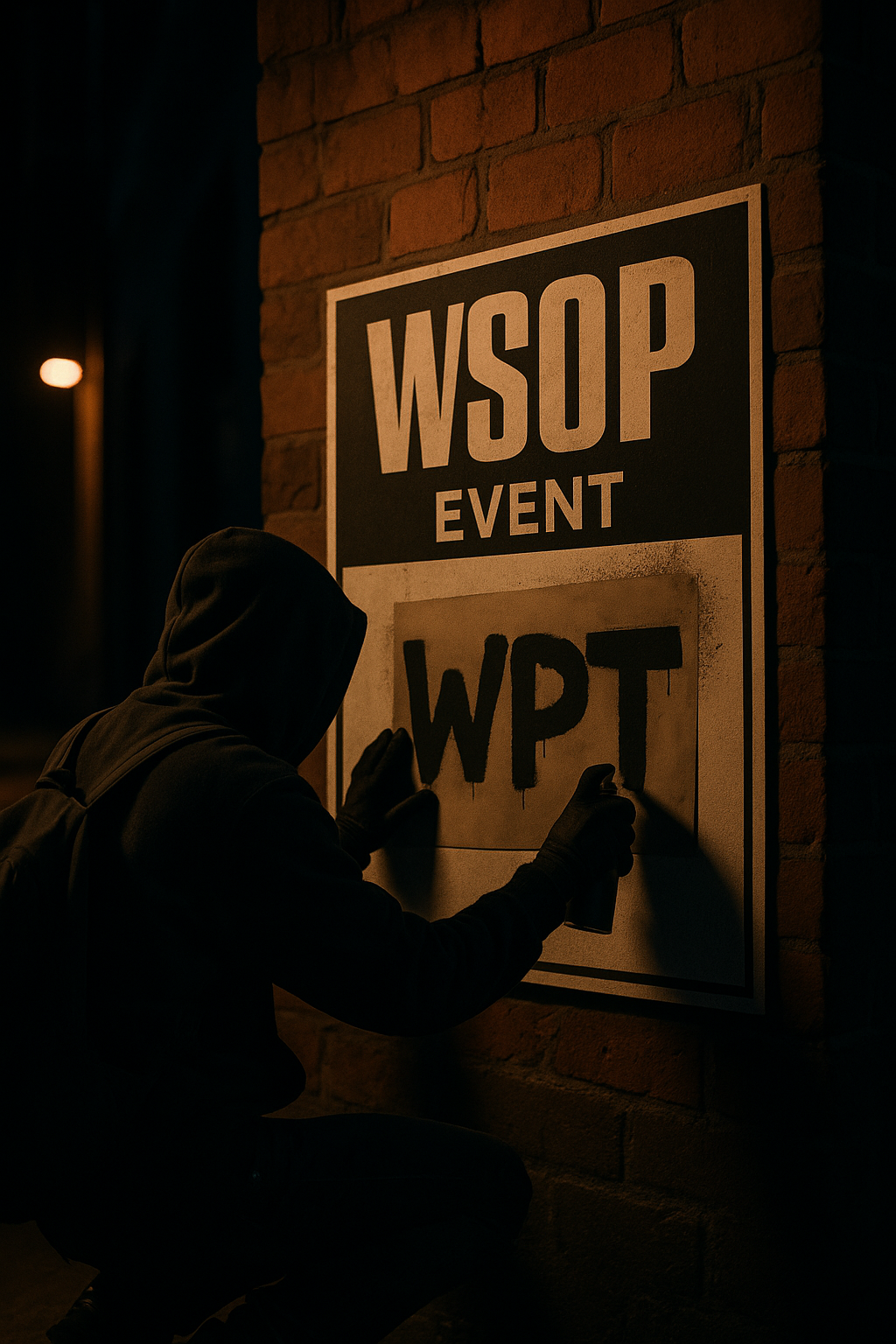
A case built in this area would likely be very specific and detailed, examining all contracts of all vendors and ambassadors, to determine where there may have been material damage in terms of exclusivity breaches, unauthorised marketing zones, promotional ambush or conflict with any streaming/broadcast agreements.
This is a tough line, but the best argument for it is that, win or lose, it likely protects WSOP from another hi-jacking attempt that potentially corrupts play (ie forces them into a licence breach outside their control) in the biggest series of the year.
The reason not to follow this line is the same as the previous one, bottom-line expense.
Prove You Can Let It Go
After the initial scare of withholding funds to remind everyone who is boss of the World Series of Poker, there is also the option to pay the players, back down and say “you got us” to WPT.
This is the option I hope for, because anything else is a waste of money, and on paper that’s my money, and your money, and any other losing/high rake paying player’s money being spewed on dick-measuring legal nonsense.
I don’t want to hear about how it’s “good for poker” to fling a milly on a negative ROI promotion, no it’s fucking not. If you have 1milly to “gift” to poker, give poker something it actually needs, because 1milly worth of unnecessary drama was definitely not required, we get that for free all year.
Proof Of Poker’s Problems
I don’t work for WSOP, but if I did, I’d be pissed right now. Whatever WPT’s overarching corporate “strategy” looks like, one of the expected outcomes of this specific tactical was to piss off WSOP.
With my corporate head on, it’s ridiculous and embarrassing, with my recreational customer head on it’s fucking funny.
Not “laugh my credit card numbers into the WPT deposit fields” funny, but “laugh whilst I’m watching WSOP on PokerGo” funny, sure.
Once I’ve stopped laughing, I load PokerStars and deposit there, because obviously neither WSOP nor WPT can be trusted with my money.

WSOP should have acted on this quicker, it’s critical to have awareness of direct competitor marketing attacks, and prepare a response that doesn’t impact your customers.
WPT should grow the fuck up. Redundancies and massive, low-return marketing spews from associated brands in the same financial reporting period? Yuck guys, seriously un-fucking-funny.
Shocking corporate failure to employ sensible brand oversight of an expert collateral team; an embarrassingly unprofessional demonstration of playing the game of business like recreationals.
Yet another sign poker is no longer a serious business concern for operators, and the desperation from players for “extra value” has got to the point it’s completely corrupted the gameplay; we’re so desensitised to that truth we’re clapping for promotions that exacerbate it.
There’s nothing to applaud here, from anyone, not the operators nor the players; every poker meme is gallows humour at this point.
ChatGPT assessed the ending of this as “tailing off into a rant”. Yeah, good, it is a rant and LLMs and humans alike can eat it.
——–
I realised as I went to publish this, I’ve written WPT instead of ClubWPT/Gold throughout. I decided not to change because WPTGlobal, ClubWPT, ClubWPTGold (are there more?) use eachother for brand reach, so not interested in a discussion of “legally distinct” when the customers the marketing is targeted at do not care. Parent Brands that mix licensed and unlicensed gambling know the (potentially very profitable) risk.
 thepokerbaffer
Leave a comment